This post may contain affiliate links. Please read our Affiliate Disclosure for more information.
What is Sinigang na Beef?
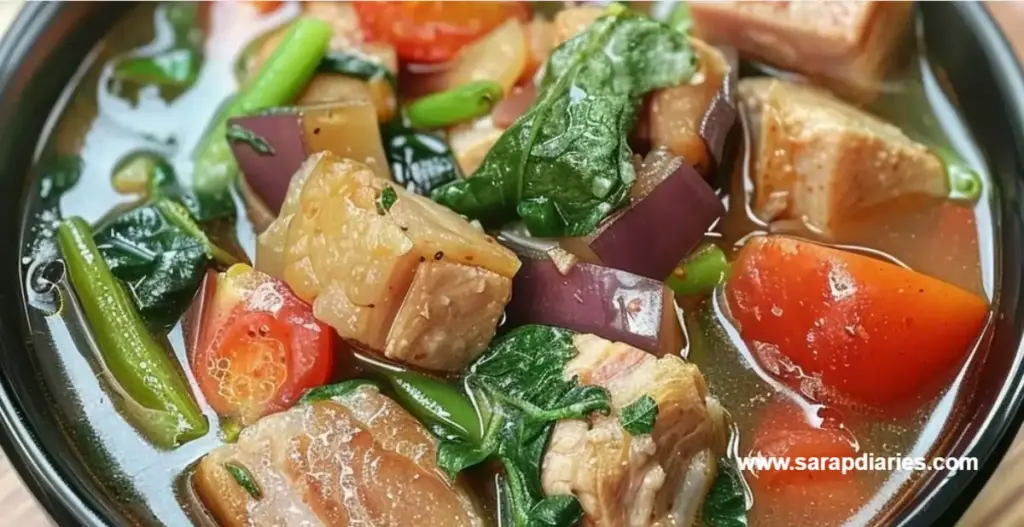
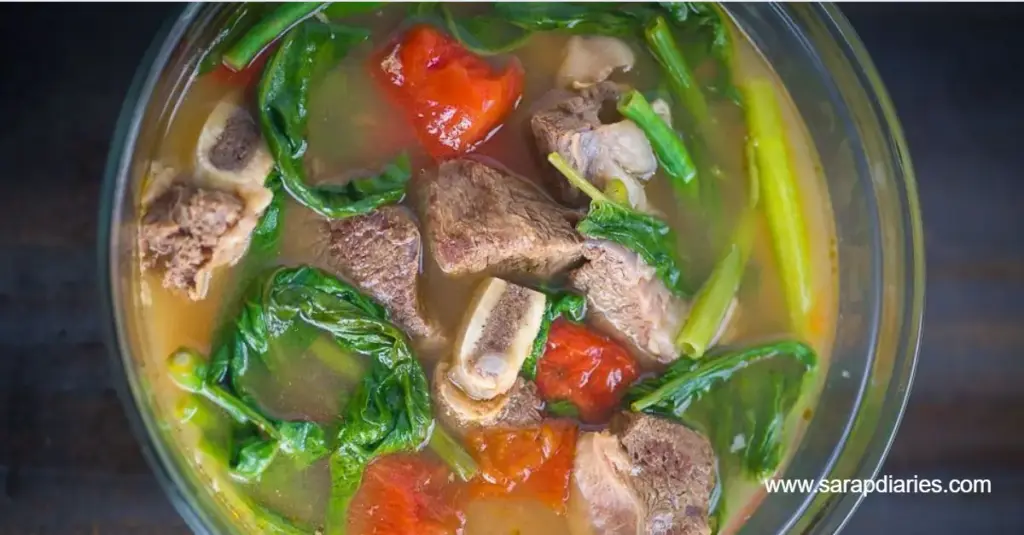
Sinigang na beef is a classic Filipino sour soup where beef short ribs are simmered low and slow until tender, then cooked in a savory and tangy broth flavored with tamarind. Loaded with vegetables like gabi, labanos, and kangkong, this dish is known for its rich sabaw and comforting character.
In many Filipino homes, sinigang na beef is the kind of ulam that brings everyone to the table, lalo na kapag gusto ng maasim-init na sabaw.
Why Masarap?
This dish delivers comfort in every spoonful. The beef turns melt-in-your-mouth tender, the broth becomes deep and flavorful, and the asim from sampalok instantly boosts the appetite. Gabi adds a subtle creaminess, while chilies give just enough heat to round out the flavors. It’s warm, filling, at talagang pang-tanggal lamig at pagod.
Best Enjoyed For
This dish is best enjoyed for lunch or dinner, especially on rainy days or when the family is craving a hearty sabaw-based meal.
Ingredients
- 3 pounds beef short ribs
- 10 cups water
- 1 onion, peeled and quartered
- 2 large Roma tomatoes, quartered
- 1 tablespoon fish sauce (patis)
- 6 gabi (taro), peeled
- 2 finger chilies, peeled and halved (depending on size)
- 1 (6-inch) radish (labanos), peeled and sliced ½-inch thick on a bias
- 15 large tamarind pieces or 1½ packs tamarind base powder (1.41 oz each)
- 1 bunch kangkong (water spinach)
- Salt and pepper, to taste
How to Cook sinigang na beef
- Combine the beef short ribs and water in a large pot over medium heat. Bring to a boil, skimming off any scum that rises to the surface.
- Once the broth looks clear, add the onion, tomatoes, and fish sauce.
- Reduce the heat, cover, and simmer for 1 to 1½ hours or until the beef is fork-tender.
- Add the gabi and cook until soft, about 6 to 8 minutes.
- Add the finger chilies and sliced radish, then simmer for another 4 to 5 minutes.
- Stir in the tamarind base powder (if using) until fully dissolved. Season with salt and pepper to taste.
- Trim and discard the bottom 2 inches of the kangkong stalks. Cut the rest into 3-inch lengths, separating stems from leaves.
- Add the kangkong stems first and cook briefly. Add the leaves last and cook just until wilted.
- Serve hot with rice.
If Using Fresh Tamarind
- Rinse the tamarind and place in a small pot with 1 cup of water.
- Boil until the tamarind softens and the skins begin to split.
- Mash using a fork to release the juice.
- Strain the mixture, pressing well to extract the sour liquid.
- Discard the seeds and skins, then add the juice to the soup.
Serving Suggestions
Sinigang na beef is best enjoyed piping hot with a generous serving of freshly steamed white rice. The rich, sour sabaw is meant to be poured over rice, making every bite comforting and satisfying. For a well-rounded meal, this dish pairs especially well with crispy side dishes that contrast the broth’s asim.
A classic choice is Lumpiang Shanghai—its crunchy wrapper and savory filling balance the tangy soup beautifully. For a more indulgent spread, sinigang na beef also works well alongside fried fish or simple grilled dishes that won’t overpower the broth.
Those who enjoy exploring different sour soups may want to try Sinigang na Baboy as a pork-based variation. It offers a similar comforting experience but with a slightly richer, meatier flavor profile.
Storage Tips
- Allow the soup to cool completely before storing to prevent excess moisture buildup.
- Transfer to a clean, airtight container and keep refrigerated.
- Best consumed within 2–3 days to enjoy the beef at its most tender and the broth at its freshest.
- When reheating, warm gently over low heat to avoid overcooking the vegetables and drying out the meat.
Proper storage helps preserve the deep, comforting flavors that make this dish a favorite pang-lunch or pang-dinner ulam. 🍲
Frequently Asked Questions
Can this be cooked faster?
Yes. The beef can be pressure-cooked for about 25–30 minutes, then transferred to a pot to finish cooking with the vegetables and souring agent.
Can other vegetables be added?
Absolutely. Okra, sitaw, or even eggplant work well depending on availability.
Is this dish similar to other sinigang versions?
While the sour base is similar, each version has its own character. Seafood lovers might enjoy Sinigang na Hipon, which has a lighter but equally comforting broth.
Does it taste better the next day?
Yes. Like many sabaw dishes, the flavors deepen after resting, making leftovers even more satisfying.
Want more stories beyond food?
More helpful reads:
- FeedFrenzyPlus.com offers curated news and informative articles.
- HeyPositivity.com provides motivational quotes and uplifting content.

Discover more easy and delicious recipes you’ll love. Kasama mo ang SarapDiaries.com for all things masarap.

GV Mendez is a passionate food lover who delights in cooking, exploring, and experimenting with flavors. She brings a creative touch to every recipe, sharing her culinary ideas and insights with fellow food enthusiasts. As an author at Sarap Diaries, she inspires readers by turning each dish into a memorable and flavorful experience.