This post may contain affiliate links. Please read our Affiliate Disclosure for more information.
What Is Sinigang sa Bayabas?
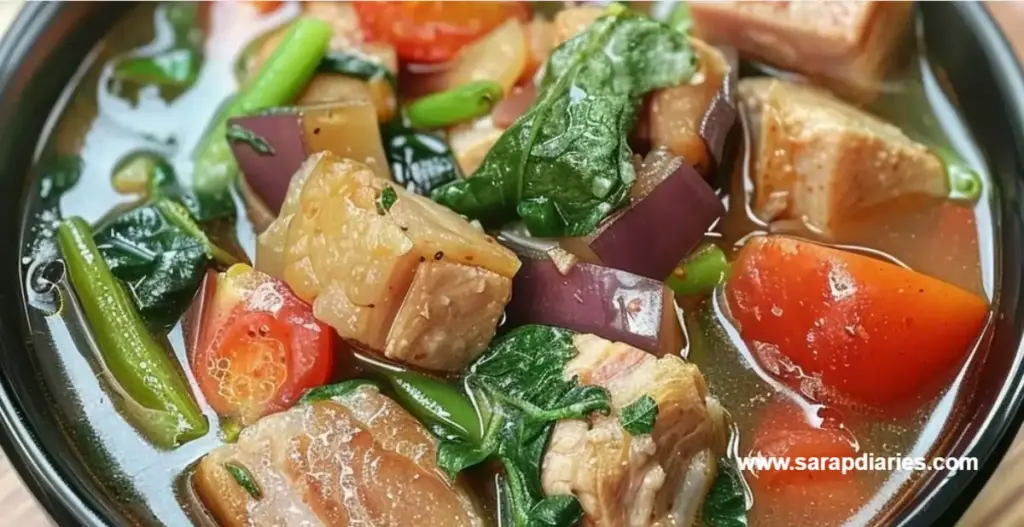
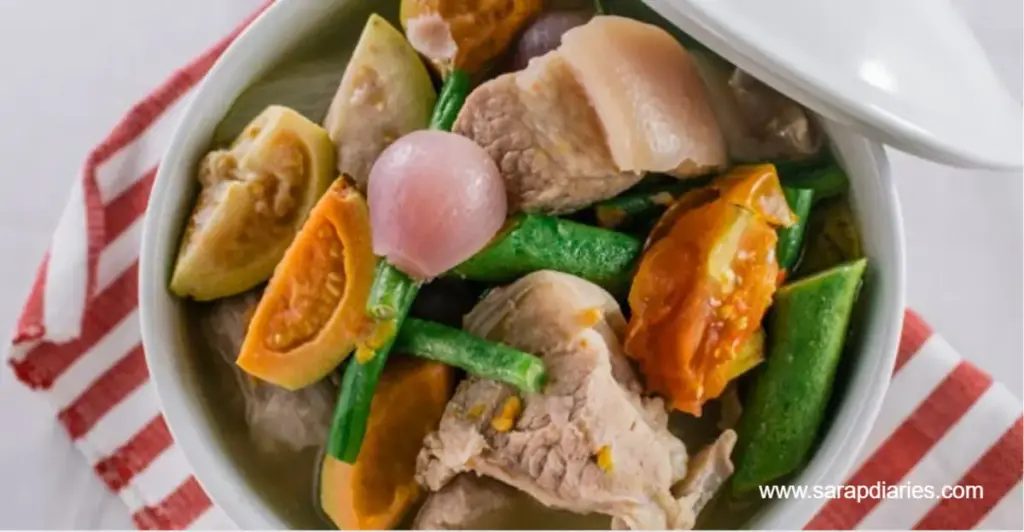
Sinigang sa bayabas is a traditional Filipino soup dish that uses ripe guava as the base of its broth instead of the usual tamarind. The result is a sabaw that’s mildly sweet, fragrant, and gently savory.
Pork is simmered slowly until tender, allowing it to absorb the subtle fruitiness of the bayabas, while a variety of vegetables complete the dish. Compared to Sinigang na Baboy, this version is less sour and more aromatic, making it ideal for those who enjoy a softer, comforting flavor profile.
Why Masarap?
Sinigang sa bayabas is masarap because of its balance. The natural sweetness of guava blends beautifully with the richness of pork and the umami from patis. The broth feels light yet deeply flavorful, while the vegetables add layers of texture—from the creaminess of gabi to the slight crunch of sitaw and okra. Every bowl feels warm and familiar, parang lutong bahay na kayang magpagaan ng pakiramdam after a long day.
Best Enjoyed For
Sinigang sa bayabas is best enjoyed for lunch or dinner. Its hearty broth and generous servings of meat and vegetables make it filling enough for a main meal, especially when paired with hot rice and shared with family.
Ingredients
- 2–3 cups water
- 1 kilo pork, chopped into serving pieces
- 2 tomatoes, quartered
- ½ kilo ripe guava (bayabas), quartered
- 2 red onions, sliced
- 3 pieces gabi (taro root), peeled and quartered
- 1 piece labanos (radish), quartered
- Salt, to taste
- 2 cups sitaw (string beans), cut into 1½-inch pieces
- 5 pieces okra, sliced
- 2 small eggplants, sliced diagonally
- 1 bunch kangkong (water spinach), leaves separated
- 1 tablespoon fish sauce (patis)
How to Cook Sinigang sa Bayabas
- Bring the water to a steady boil in a medium pot. Make sure there’s enough liquid to cover the pork.
- Add the pork pieces carefully, followed by the tomatoes and guava. Lower the heat and let everything simmer until the pork becomes tender and the guava releases its aroma into the broth, about 30–40 minutes.
- Add the sliced onions, gabi, and labanos. Lightly season with salt and allow the vegetables to cook until just tender, around 8 minutes.
- Add the sitaw, okra, and eggplant. Continue simmering until the vegetables soften but still hold their shape, about 6 minutes.
- Add the kangkong leaves and fish sauce, then let the soup simmer for another 5 minutes to bring all the flavors together.
- Taste and adjust seasoning if needed, then serve hot.
Serving Suggestions
This comforting soup is best served with freshly steamed white rice and a simple patis with calamansi or sili on the side. For a more complete Filipino spread, it pairs well with something crispy like Lumpiang Shanghai, which adds contrast to the soft, savory broth. If guava isn’t available, a tangier alternative like Sinigang sa Sampalok can also satisfy sinigang cravings.
Storage Tips
- Allow the soup to cool completely before storing
- Transfer to an airtight container and refrigerate
- Best consumed within 2–3 days
- Reheat gently to preserve the aroma of the guava
Frequently Asked Questions
Can a different cut of pork be used?
Yes. Pork ribs, kasim, or liempo work well, as long as they’re simmered until tender.
Is this sweeter than other sinigang versions?
It has a mild natural sweetness from the guava, but it remains savory and balanced rather than sugary.
Can this be cooked ahead of time?
Yes. The flavors deepen after resting overnight, making it even more comforting the next day.
What vegetables can be substituted?
If kangkong isn’t available, pechay or mustasa can be used, though kangkong remains the most traditional choice.
Want more stories beyond food?
More helpful reads:
- FeedFrenzyPlus.com offers curated news and informative articles.
- HeyPositivity.com provides motivational quotes and uplifting content.

Discover more easy and delicious recipes you’ll love. Kasama mo ang SarapDiaries.com for all things masarap.

GV Mendez is a passionate food lover who delights in cooking, exploring, and experimenting with flavors. She brings a creative touch to every recipe, sharing her culinary ideas and insights with fellow food enthusiasts. As an author at Sarap Diaries, she inspires readers by turning each dish into a memorable and flavorful experience.