This post may contain affiliate links. Please read our Affiliate Disclosure for more information.
What Is Sinigang sa Sampalok?
Sinigang sa sampalok is one of the most iconic Filipino soup dishes, loved for its bold asim that instantly wakes up the appetite. The sourness comes from unripe tamarind, slowly boiled and pressed to release its natural tang, which becomes the heart of the broth.
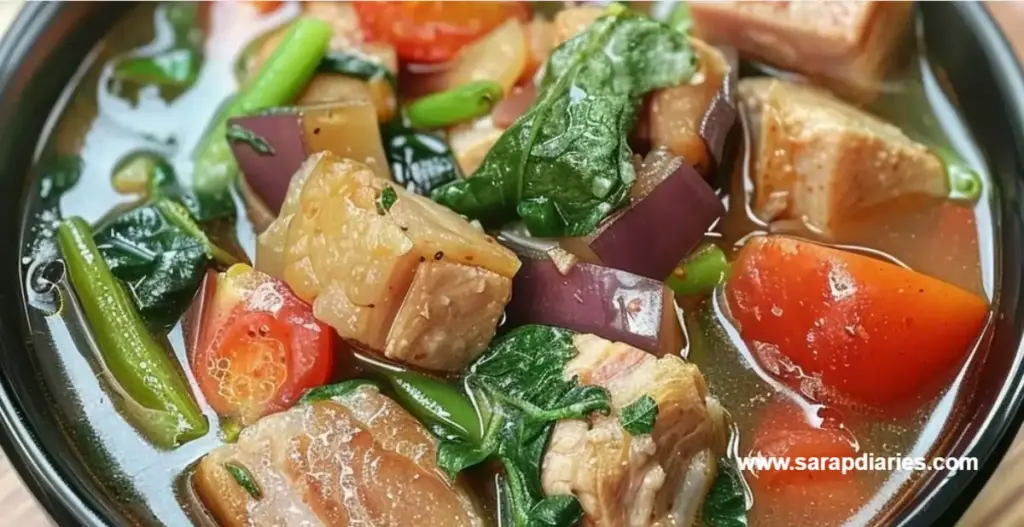
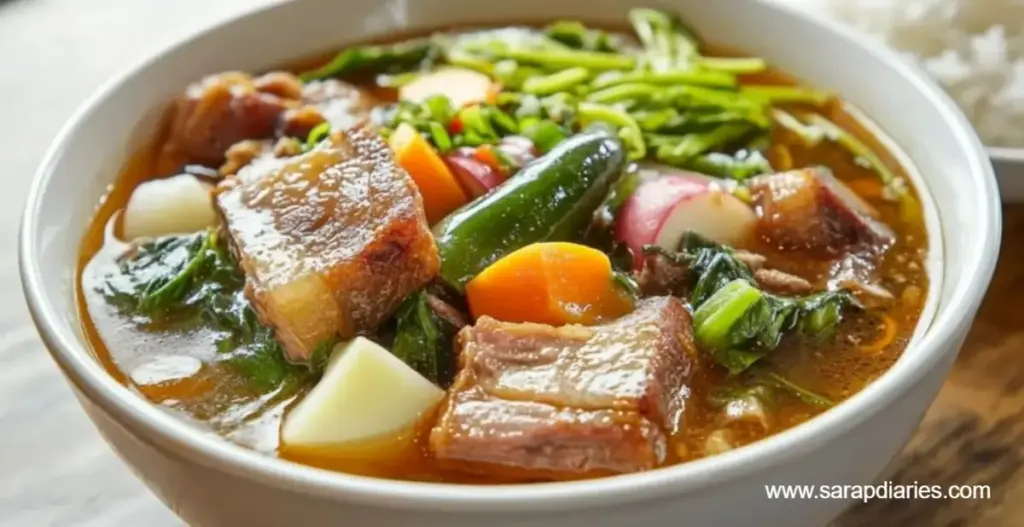
Pork belly is simmered until tender, then paired with fresh vegetables that soak up the flavorful sabaw. Compared to milder versions like Sinigang sa Bayabas, this classic tamarind-based sinigang delivers a sharper, more pronounced sourness that many Filipinos crave.
Why Masarap?
Masarap ito because every element works together. The broth is bright and sour but balanced by the richness of pork belly and the savory depth of fish sauce. Gabi adds a subtle creaminess, while okra, kangkong, and sili bring texture and gentle heat. The aroma alone—maasim, meaty, and comforting—feels instantly familiar. It’s the kind of ulam that makes rice disappear fast, especially when served piping hot.
Best Enjoyed For
Sinigang sa sampalok is best enjoyed for lunch or dinner, particularly on rainy days or when a warm, sabaw-based meal feels most satisfying.
Ingredients
- 2 lbs pork belly, chopped
- 16 ounces unripe tamarind (sampalok)
- 1 bunch kangkong (onchoy), cleaned and sliced
- 3 medium gabi (eddo), halved
- 2 medium tomatoes, quartered
- 1 medium yellow onion, quartered
- 12 pieces okra
- 3–4 pieces long green chili (siling pansigang)
- 4 cups water
- 2 cups beef broth
- 2 tablespoons cooking oil
- Fish sauce, to taste
How to Cook Sinigang sa Sampalok
- Bring the water to a boil in a pot, then add the unripe tamarind. Let it cook for about 45 minutes to fully draw out the sour flavor. Remove the tamarind and set both the liquid and pulp aside.
- In a separate deep pot, heat the cooking oil. Add the pork belly and sear until lightly browned and some fat is rendered.
- Add the tomatoes and onion, then sauté for about 2 minutes until softened and fragrant.
- Pour in the reserved tamarind water, leaving out the pulp. Add the beef broth and gabi, then bring to a gentle simmer.
- Press the boiled tamarind through a strainer to extract the remaining juice. Add this juice to the pot and simmer for about 60 minutes, or until the pork becomes tender. Add more water if needed to maintain a soupy consistency.
- Add the okra and long green chilies, then cook for about 3 minutes.
- Add the kangkong and season with fish sauce. Stir gently, cover the pot, and turn off the heat. Let it rest for 5 minutes before serving.
Serving Suggestions
Sinigang sa sampalok is best served with freshly steamed white rice and a simple sawsawan of patis with sili. For a more complete Filipino meal, this sour and savory soup pairs well with something crispy like Lumpiang Shanghai. If you enjoy exploring sinigang variations, dishes like Sinigang na Baboy or Sinigang na Beef offer equally comforting alternatives.
Storage Tips
- Allow the soup to cool completely before storing
- Transfer to an airtight container and refrigerate
- Best consumed within 2–3 days
- Reheat gently to preserve the balance of sour and savory flavors
Frequently Asked Questions
Can a different cut of pork be used?
Yes. Pork ribs or kasim work well, though pork belly gives the richest flavor and mouthfeel.
How sour should the broth be?
The sourness depends on the tamarind used. Adjust by adding more tamarind juice if a stronger asim is preferred.
Can this dish be cooked ahead of time?
Yes. The flavors deepen after resting overnight, making it even more comforting the next day.
Is beef broth required?
It adds depth, but water alone can be used if a lighter broth is preferred.
Want more stories beyond food?
More helpful reads:
- FeedFrenzyPlus.com offers curated news and informative articles.
- HeyPositivity.com provides motivational quotes and uplifting content.

Discover more easy and delicious recipes you’ll love. Kasama mo ang SarapDiaries.com for all things masarap.

GV Mendez is a passionate food lover who delights in cooking, exploring, and experimenting with flavors. She brings a creative touch to every recipe, sharing her culinary ideas and insights with fellow food enthusiasts. As an author at Sarap Diaries, she inspires readers by turning each dish into a memorable and flavorful experience.